

Chennai does not unfold like a postcard city. It works through heat, sea wind, temple bells, museum corridors, music-season memory, old colonial buildings, filter coffee counters and long roads along the Bay of Bengal. Travelers search for things to do in Chennai because the city can feel spread out unless the day is arranged by time and neighborhood. This guide builds Chennai around coastal mornings, Mylapore culture, indoor history, food hours and one strong East Coast Road extension.
Start With Chennai’s Clock, Not a Checklist
| Time of day | Best Chennai move | Why it works |
| Early morning | Beach road and Mylapore lanes | Cooler air, softer light and easier walking |
| Late morning | Museum, fort or church stops | Indoor breaks help when the sun turns sharp |
| Afternoon | Food, coffee or DakshinaChitra | The pace slows without wasting the day |
| Evening | Besant Nagar, music, dinner or shopping | The city feels more social after sunset |
This timing-first method keeps places to visit in Chennai from becoming a scattered list. The coast, temple neighborhoods, museums and food streets all deserve different hours.
Let the Coast Set the First Mood
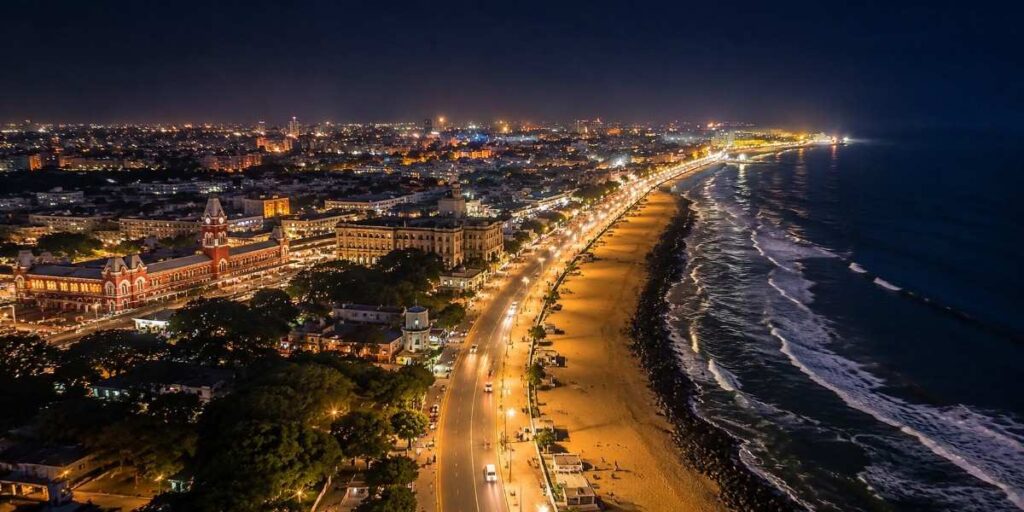
A Chennai morning should start by the sea, if the weather is good. Marina Beach Chennai is located along the Bay of Bengal, and the district administration says it is a long sandy stretch associated with sunrise walks, evening stalls, nearby historic buildings and strong undercurrents. Try to treat it as a walking beach first. There is no swimming for pleasure here.
The beach drive, in fact, adds the element of a picnic without any sightseeing. Senate House, Chepauk Palace, Presidency College, and the University of Madras are located around this larger coastal belt. They are the reason the seafront has an old, institutional character that many hurried visitors miss.
If you want to keep the morning coastal, head for Santhome. Santhome Cathedral is a church stop on the same side of the city. The cafes at Besant Nagar and Elliot’s Beach are better later in the day, when the evening crowds start gathering.
Mylapore Carries Chennai’s Cultural Pulse
Don’t be misled by the city’s temples when you think of Mylapore. Besides temples, this old neighborhood of Chennai is also well known for its religious worship, tank-side promenading, flower vendors, traditional houses, breakfast stalls, music halls, and sari shops, all rolled into one compact area.
Kapaleeshwarar Temple Chennai is the natural anchor here. Tamil Nadu Tourism describes it as a prominent Shiva temple in Mylapore, with Kapaleeswarar and Karpagambal as the main deities. The current temple structure is more than 300 years old, and the east gopuram rises higher than the western tower.
Slow movement around the temple is key. Buy flowers only if required, remember footwear rules and don’t block devotees for photographs. Pair the visit with breakfast at a nearby spot, sip a filter coffee or stroll around the tank at a leisurely pace instead of rushing straight to the next landmark.
Mylapore gives some of the strongest things to do in Chennai because it shows the city as lived culture, not only as a destination list.
Read Old Madras Indoors and in Stone
Chennai’s indoor history helps during heat, rain, or long family days. Fort St George brings the old Madras layer into view. The Chennai district page notes that the fort still has six-meter-high walls, houses government functions and includes a museum with Raj-era objects, portraits, coins, medals, uniforms and colonial-period artifacts.
The Government Museum at Egmore is another serious stop. Established in 1851, it is described by the district administration as the second oldest museum in India after the Indian Museum in Kolkata. Its campus includes sections for archaeology, bronze, art, natural history, children’s exhibits and more.
Use this small filter before choosing indoor stops:
- Pick Fort St George for colonial history.
- Pick Government Museum for collections and sculpture.
- Pick Valluvar Kottam for Tamil literary memory.
- Pick DakshinaChitra for South Indian craft and architecture.
- Pick a gallery or performance venue when the trip needs something current.
These are Chennai tourist places with different purposes, so putting all of them into one day weakens the experience.
Eat Chennai by the Hour
Timing is the best way to understand food in Chennai. Breakfast has a different mood than beach snacks, temple-side meals, afternoon coffee, or late dinners.
| Eating hour | What to try | Best fit |
| Morning | Idli, dosa, pongal, vada, filter coffee | Mylapore, Triplicane, T Nagar, Adyar |
| Afternoon | South Indian meals, curd rice, seafood | Local restaurants or coastal areas |
| Evening | Sundal, bajji, murukku, chaat-style snacks | Beach stretches and busy streets |
| Dinner | Chettinad dishes, biryani, seafood, tiffin | Nungambakkam, Besant Nagar, Mylapore, Velachery |
There is no need for a chaotic crawl to find good street food in Chennai. Pick only one neighborhood, check the hygienic conditions, and have the beach snacks just a little bit if the weather is warm and humid. Usually, the best food is where the food already serves the local population in your plan.
Take the East Coast Road With Intention
The East Coast Road can turn a Chennai trip into a wider Tamil Nadu experience. DakshinaChitra sits at Muttukadu on the ECR, about 25 kilometers south of central Chennai, and presents South Indian architecture, crafts and lifestyle traditions through a living-museum format.
Mahabalipuram from Chennai needs a clearer commitment. UNESCO describes Mamallapuram as a Pallava-era port city with rock-cut cave temples, monolithic rathas, bas-relief sculptures, structural temples and excavated remains. Tamil Nadu Tourism places Chennai International Airport about 55 kilometers from Mahabalipuram and notes November to February as the more pleasant period.
Do not treat Mahabalipuram as an after-lunch detour if you care about the monuments. Shore Temple, Pancha Rathas, Arjuna’s Penance and the caves need time, sunlight and walking energy.
Move Through Chennai Without Fighting the City
Chennai has many neighborhoods, so movement deserves its own planning. Metro helps on connected corridors, suburban trains serve older rail-linked pockets, and autos or app cabs are easier for short transfers between food, beach, and temple areas. Do not select a hotel only by the lowest tariff if every planned stop sits far away. One can go for Mylapore or T Nagar if one wishes to be near the culture and food. Besant Nagar or Adyar would be better options if one wishes to spend time on the coast and have easy access to ECR. Nungambakkam and Egmore would be the areas that one should look at if one wishes to enjoy museums, restaurants, and central connections all at one’s fingertips.
- Keep long ECR plans away from heavy city days.
- Add buffer time before airport transfers.
- Treat peak-hour crossings as real schedule risks.
- Choose fewer neighborhoods when traveling with elders.
Pair Chennai Stops with Better Judgment
- Pair Marina, Santhome and Mylapore for a strong morning.
- Pair Fort St George with the Government Museum only when you enjoy history.
- Pair DakshinaChitra with an ECR lunch, not with a packed city center day.
- Pair Besant Nagar with dinner, coffee, or a relaxed beach evening.
- Keep Mahabalipuram separate from a heavy Chennai sightseeing day.
- Avoid open coastal walks during harsh afternoon heat.
- Avoid building the whole plan around distant food recommendations.
The smartest things to do in Chennai are often the ones that respect heat, distance, and the city’s slower cultural rhythm.
Also read: A Traveler’s Guide to the Best Things to Do in Puducherry
Final Takeaway
Chennai finds it easier to follow its natural order. Leave the morning for the coast, allow enough time for Mylapore, use museums and forts when the day needs shade and keep the East Coast Road for a separate, more deliberate plan. The best things to do in Chennai aren’t always loud or photogenic at first sight. Many sit inside rituals, old buildings, measured meals, and walks in the neighborhood. They call for patience rather than speed.
FAQs
Why should Marina Beach be visited early?
The air is cooler, the light is softer, and it’s easier to walk, so the Marina is best early morning before the crowds pick up. The sea can have strong undercurrents, so the beach is best for views rather than casual swimming.
What makes Mylapore different from a normal temple stop?
Mylapore weaves together devotion, cuisine, floral decorations, movement along the tank, ancient lanes, and cultural recollections into a single locality. People who take their time wandering around the temple precinct get a deeper insight into Chennai than those who just snap a quick photo.
Should Mahabalipuram replace a Chennai city day?
Mahabalipuram should replace a full day of Chennai sightseeing, intended only for travelers who prefer Pallava monuments and coastal heritage. Trying to add it after multiple city stops usually creates a rushed and tiring plan.
Which Chennai stops work best during harsh afternoon heat?
Government Museum, Fort St George Museum, DakshinaChitra, galleries, cafes, and indoor restaurants work better during harsh afternoons. Open beaches, temple streets, and long ECR walks feel easier in the morning or evening.
How can travelers experience Chennai food without overplanning?
Choose food by neighborhood, by time instead of bouncing around a tonne of celebrity names. A Mylapore breakfast, a simple South Indian meal, filter coffee, and one beach snack can showcase the food culture of Chennai without exhausting you.




Leave a Reply