

There is no single month that works equally well for every Meghalaya trip. Weather changes noticeably between the highlands, river valleys and wetter southern slopes, so the best time to visit Meghalaya depends on where you are going and what you want to do. October to April is the broadest travel window, with October and November offering a particularly useful middle ground: the hills remain green, waterfalls still carry water, and clearer weather makes road travel easier.
Choose the Travel Window That Fits Your Trip
A family holiday, a waterfall-focused route and a honeymoon do not need the same conditions. Use the season to match the experience rather than choosing dates on weather alone.
| Travel priority | Recommended window | Main reason | Planning trade-off |
| First visit | October to November | Green landscapes, active falls and easier road access | Short spells of rain can still occur |
| Best time to visit Meghalaya with family | March to April | Comfortable daytime weather and easier movement | Pre-monsoon showers may begin |
| Trekking and caving | November to February | Drier trails and better access | Chilly mornings call for warm layers |
| Best time to visit Meghalaya for waterfalls | June to September | Rivers and waterfalls are at their most powerful | Heavy rain can slow or change plans |
| Clear Umngot views | December to February | Lower rainfall can improve water clarity | Waterfalls are less forceful than after the monsoon |
| Best time to visit Meghalaya for honeymoon | November to February | Cooler weather and clearer hill views | Popular stays can book out early |
Distances on a map can be deceptive in Meghalaya. Shillong, Sohra, Dawki and Mawlynnong may appear close together, but winding hill roads, fog and rain can add substantial time to a drive. Build the route around realistic travel hours, not kilometres alone.
Match Meghalaya’s Roads to the Season
The best season to visit Meghalaya is easier to judge by road conditions, visibility and rainfall than by temperature alone. A Meghalaya weather by month chart can show the numbers, but it does not tell you how the same route may feel completely different as the hills move from post-monsoon clarity to winter cold or peak rain.
October to February: Better Visibility, Different Kinds of Cold
By October, the heaviest rain has eased and longer spells of sunshine begin returning to the hills. October and November still carry the deep green left behind by the monsoon, and waterfalls retain much of their volume. Roads are generally easier to manage, though an occasional shower can still justify keeping a small umbrella close.
Winter changes the experience again. From December through February, clearer skies improve visibility across many routes. Sunny afternoons can be comfortable, but early mornings are much colder around Shillong, Mylliem, Laitlyngkot and other elevated areas. Frost and very low dawn temperatures are possible across parts of the central highlands.
March and April: A Comfortable Window for Moving Around
Spring removes much of winter’s chill without bringing the full force of the monsoon. March and April work well for road trips, caves, gardens and shorter walks, with lighter clothing usually sufficient during the day. Rain can begin to return before the main wet season, particularly around forested areas and the southern slopes.
May to September: Travel Starts Following the Rain
Once the monsoon settles over Meghalaya, the pace of a road trip changes. Heavy cloud can reduce visibility quickly, prolonged rain affects driving conditions, and steep paths or remote stretches demand more care. The trade-off is dramatic water flow: waterfalls and rivers become far more powerful during these months. Longer drives need more planning, and road conditions deserve as much attention as the destination itself.
Choose the Region Before You Choose the Month
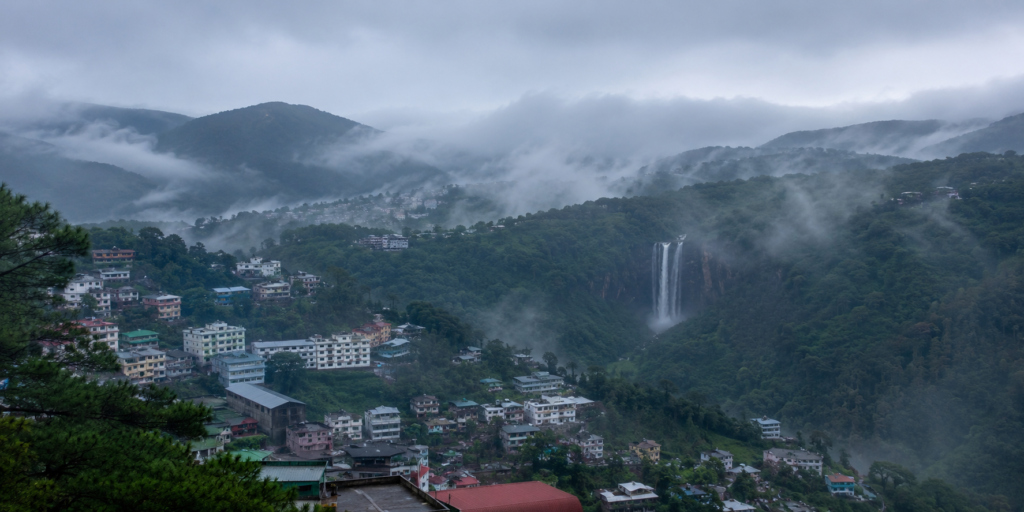
A single weather rule does not work across Meghalaya. Shillong, Sohra, Mawsynram, Dawki and the Garo Hills can behave very differently because elevation, slope exposure and recent rainfall all influence what travellers actually experience. That is why the best time to visit Meghalaya can shift with the route rather than the calendar alone.
Shillong and the Central Khasi Hills
Shillong sits high enough to remain noticeably cooler than the plains. Conditions can also change quickly through the day, with a bright afternoon turning misty within a short span. Light layers make more sense here than planning around a single temperature reading.
Sohra and Mawsynram
For anyone looking up the best time to visit Meghalaya Cherrapunji, rainfall deserves more attention than a fixed month. Sohra and nearby Mawsynram sit along the rain-facing southern slopes, where heavy rainfall can alter waterfall strength, road visibility and valley views. Wet conditions also make long stairways and walking routes more slippery.
Dawki and Shnongpdeng
The river belt follows a different pattern. Dawki and Shnongpdeng sit lower and warmer near the Bangladesh border, and the famous water clarity is closely tied to how much rain has fallen recently. A date that works well one year may look very different after a wet spell.
Garo Hills
Tura and several routes through the Garo Hills lie below the height of the central Khasi plateau. As a result, these areas can feel warmer than Shillong, even when both are visited during the same broader season.
Think Through Monsoon Travel Before You Commit
Meghalaya in monsoon rewards travellers who are comfortable letting the weather set the pace. Rain transforms the hills, fills the waterfalls and brings mist deep into the valleys. For those who want to see the state at its most dramatic, this can be the best time to visit Meghalaya. It is a harder fit for tightly planned sightseeing.
Rainy-season travel can give you:
- Waterfalls and rivers running with far greater force
- Deep green forested slopes after sustained rainfall
- Mist-filled viewpoints that create striking photography conditions
- A closer sense of Meghalaya’s rain-soaked landscape and character
There are trade-offs to plan around:
- Wet stone steps and muddy stretches on walking trails
- Thick cloud that can hide distant valley views
- Road delays or local disruption following heavy rain
- Sightseeing plans that may need to change at short notice
For travellers who depend on clear river views, predictable road movement and comfortable walking conditions, peak monsoon can be the worst time to visit Meghalaya. The same period may also be the worst time to visit Meghalaya with family when travelling with young children, senior citizens or anyone who would find slippery paths and weather-related delays difficult.
Build Festival Dates Into the Route, Not Around It
A festival can be worth adjusting a Meghalaya itinerary for, but the date should be confirmed before hotels or transport are fixed. Annual schedules, venues, entry conditions and ticketing arrangements can change, so official announcements matter more than older travel calendars.
- Spring: Shad Suk Mynsiem belongs to the Khasi spring calendar and can influence travel dates around the event period.
- Rainy season: Behdienkhlam is centred largely around Jowai and nearby parts of the Jaintia Hills. It takes place during the wetter part of the year and carries strong community significance beyond its appeal to visitors and photographers.
- Autumn and winter: Wangala, the Nongkrem Dance and the Shillong Cherry Blossom Festival fall later in the year, giving travellers several cultural events to consider alongside their broader route.
The practical approach is to let a confirmed festival date shape part of the trip, then plan the remaining days around the region, weather and places you actually want to visit.
Leave Space in the Itinerary for Weather Delays
A good travel month cannot make a tightly packed Meghalaya route immune to rain, fog or hill-road disruption. Even during the best time to visit Meghalaya, the itinerary works better when it leaves room for changing weather, shorter daylight and local restrictions.
- Check the forecast for the specific district before setting out on a long drive.
- Start road journeys early when fog or poor visibility is expected.
- Review road updates and notices issued by the local administration.
- Keep at least half a day unplanned during wetter months so delays do not affect the entire trip.
- Confirm whether caves, river activities and remote attractions are operating before travelling to them.
- Schedule demanding treks earlier in the itinerary rather than immediately before departure.
- Respect restrictions around swollen rivers, waterfalls and other areas affected by heavy rain.
What December Means for Shillong, Sohra and Dawki
Is December good time to visit Meghalaya? For travellers who prefer clearer views, cool weather and river trips around Dawki, the answer is generally yes. Warm layers are useful, particularly during cold mornings and evenings.
For anyone considering the best time to visit Meghalaya and Shillong, December also brings holiday demand into the equation. Accommodation is worth booking early, and travellers who dislike cold mornings may find the season less comfortable. Sohra offers another trade-off: visibility tends to improve, but waterfalls may carry less water than they do during the wetter months.
Also read: Best Time to Visit Dubai: 8 Months for Weather and Deals
Choose the Month Around the Trip You Actually Want
The best time to visit Meghalaya changes with the experience you are planning. Clear viewpoints, powerful waterfalls, cultural events, easier family travel and cold-weather journeys do not all peak together. A stronger itinerary matches the month with the traveller, route distances and current weather instead of relying on the calendar alone.
FAQs
How many days are enough for a first Meghalaya trip?
Four days can cover Shillong, Sohra and one nearby valley comfortably. With six or seven days, you can add Dawki, Mawlynnong or the Jaintia Hills without rushing the route.
Which airport is best for reaching Meghalaya?
Guwahati Airport is usually more convenient because it offers more flight options and an established road route to Shillong. Shillong Airport is closer, but flight schedules and connections are more limited.
Do Indian tourists need a permit for Meghalaya?
Indian nationals generally do not need a permit to enter Meghalaya. Foreign travellers should check arrival registration rules and any additional clearance requirements for routes close to the international border.
Is Meghalaya suitable for senior citizens?
Yes, if the itinerary avoids steep stairways, long treks and packed driving days. Accessible viewpoints, shorter routes and hotels with easy vehicle access make the trip much more comfortable.
How early should accommodation be booked during festivals?
Booking several weeks ahead is advisable during major festivals, long weekends and winter holidays. Rooms in Shillong, Sohra and popular homestay areas can fill up quickly during these periods.


Leave a Reply